Buy paytaxes.eu ?
We are moving the project
paytaxes.eu .
Are you interested in purchasing the domain
paytaxes.eu ?
domain@kv-gmbh.de · 0541-91531010
Buy paytaxes.eu ?
Why does Lipschitz continuity automatically imply continuity?
Lipschitz continuity automatically implies continuity because Lipschitz continuity places a bound on the rate at which a function can change. This means that the function cannot have sudden, large changes in its values, and therefore it must be continuous. In other words, if a function is Lipschitz continuous, it is guaranteed to be continuous because it cannot have any abrupt jumps or discontinuities. This property makes Lipschitz continuity a stronger condition than just continuity. **
Is Continuity bugged?
Continuity is not bugged. It is a fundamental concept in mathematics and refers to the idea that a function or a curve can be drawn without lifting the pen from the paper. In the context of software development, continuity refers to the smooth and uninterrupted operation of a program or system. If there are issues with continuity in a software application, it is likely due to bugs or errors in the code, rather than a problem with the concept of continuity itself. **


Similar search terms for Continuity
Top-Angebote
Products related to Continuity:
-
Flat Trailer Tester,Wiring Continuity Test Tool For Trailer Lights, Boat, ATV, With LED Indicators For Circuit Diagnosis Flat Trailer Tester,Wiring Continuity Test Tool For Trailer Lights, Boat, ATV, With LED Indicators For Circuit DiagnosisEnsure the safety and reliability of your trailer or vehicles lighting system with this 4Way Flat Trailer Wiring Tester. Ideal for troubleshooting turn signals, tail lights, and more, this tool is perfect for anyone looking to streamline their...58,97 $*Shipping: 0,00 $Secure redirect to the provider
-
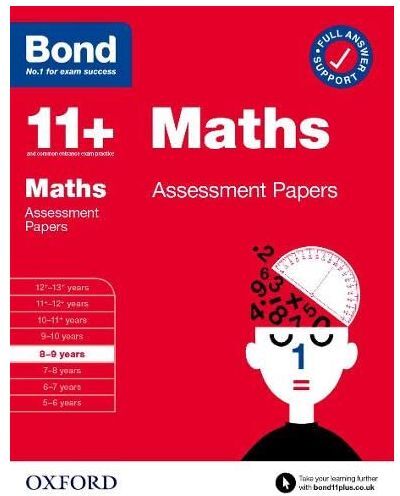
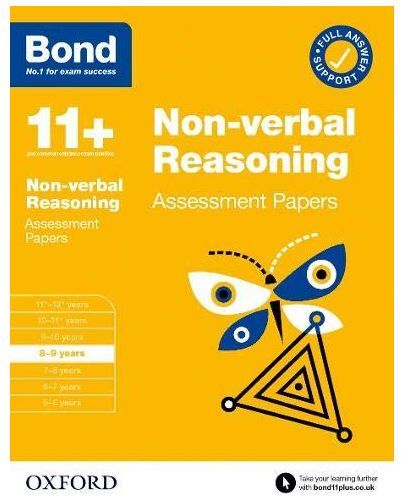
HMRC Series By Juno Dawson 3 Books Collection Set - Fiction - Paperback HarperCollins PublishersTitles in this set: 1. Her Majesty’s Royal Coven 2. The Shadow Cabinet 3. Queen B Description: Her Majesty’s Royal Coven This Is One Government Department You Don’t Want To Mess With. Hidden among us is a secret coven of witches. Know has Her Majesty’s Royal Coven,they protect the crown and country from magical forces and otherworldly evil. But their greatest enemy will come from within… There are whisperings of a prophecy that will bring the coven to its knees, and four best friends are about to be caught at the centre. Life as a modern witch was never simple … but now it’s about to get apocalyptic. The Shadow Cabinet All is not as it seems within the halls of Her Majesty’s Royal Coven… Despite thinking they’ve thwarted the prophecy, the witches are still reeling from the events of the past few months. Ciara now occupies her twin sister’s body as she prepares to take on the role of High Priestess. But why are the sinister government agents of the Shadow Cabinet so invested in her coronation? And then there’s the small matter of Dabney Hale: freshly escaped from Grierlings prison, he’s on the hunt for a mythical object that will give him unimaginable power. Leonie’s brother is on the trail, but doesn’t know the danger he now faces, and so she sets off to bring him home and bring Hale to justice. Meanwhile, Theo and Holly are left to their own devices. Theo to work out how her miraculous transformation took place and Holly to discover what’s going on with her mum and dad. Elle’s Instagram-perfect world is about to come crashing down in the most terrifying way. Queen B It’s 1536 and the Queen has been beheaded. Lady Grace Fairfax, witch, knows that something foul is at play – that someone had betrayed Anne Boleyn and her coven. Wild with the loss of their leader – and her lover, a secret that if spilled could spell Grace’s own end – she will do anything in her power to track down the traitor. But there’s more at stake than revenge: it was one of their own, a witch, that betrayed them, and Grace isn’t the only one looking for her. King Henry VIII has sent witchfinders after them, and they’re organized like they’ve never been before under his new advisor, the impassioned Sir Ambrose Fulke, a cold man blinded by his faith. His cruel reign could mean the end of witchkind itself. If Grace wants to find her revenge and live, she will have to do more than disappear. She will have to be reborn. In this gripping, propulsive, sultry novella, Juno Dawson takes us back to the bloody beginnings of Her Majesty’s Royal Coven to show us the strength, steel and sacrifice it takes to make a sisterhood. Feature Specification Author Juno Dawson Books Included Her Majesty's Royal Coven, The Shadow Cabinet, Future Perfect Format Paperback Collection Target Audience Adult / New Adult (Ages 16+) Publisher Harper Voyager (HarperCollins) Genre Contemporary Fantasy / Urban Fantasy Key Themes Witchcraft, Sisterhood, British Politics, LGBTQ+ Identity 2026 Context Established...22,99 £*Shipping: 2,99 £Secure redirect to the provider


-
What is personal continuity?
Personal continuity refers to the sense of identity and connectedness that individuals experience over time. It encompasses the feeling of being the same person despite changes in physical appearance, beliefs, and experiences. Personal continuity is often tied to the concept of self-identity and the ability to maintain a coherent sense of self across different stages of life. It can also involve the preservation of memories, values, and relationships that contribute to a person's sense of continuity and stability. **
-
What is the difference between pointwise continuity and uniform continuity in mathematics?
Pointwise continuity refers to the property of a function where it is continuous at each individual point in its domain. This means that for every point x in the domain, the function f(x) has a limit as x approaches that point. On the other hand, uniform continuity refers to the property of a function where the rate of change of the function is controlled by a single value for the entire domain. In other words, for any ε > 0, there exists a δ > 0 such that for all x and y in the domain, |x - y| < δ implies |f(x) - f(y)| < ε. In pointwise continuity, the choice of δ may depend on the specific point x, while in uniform continuity, the choice of δ must work for the entire domain simultaneously. **
-
What is the equivalence of the continuity concepts Epsilon-Delta and sequential continuity?
The equivalence of the continuity concepts Epsilon-Delta and sequential continuity lies in the fact that they both capture the idea of a function being continuous at a point. In the Epsilon-Delta definition, continuity is defined in terms of neighborhoods and limits, while in sequential continuity, it is defined in terms of sequences converging to a point. Both definitions ultimately aim to capture the intuitive notion of a function having no sudden jumps or breaks at a particular point. Despite the differences in their formal definitions, both concepts are equivalent and can be used interchangeably to prove continuity of a function. **
-
How can one disprove continuity?
One way to disprove continuity is to find a point where the function is not defined or where the limit of the function does not exist. Another way is to show that the function has a jump discontinuity, where the value of the function changes abruptly at a certain point. Additionally, one can disprove continuity by demonstrating that the function has an infinite discontinuity, such as a vertical asymptote where the function approaches infinity at a certain point. **
What is the continuity equation?
The continuity equation is a fundamental principle in fluid dynamics that states that the mass of a fluid entering a system must be equal to the mass of the fluid leaving the system, assuming there are no sources or sinks of mass within the system. Mathematically, it is expressed as the equation of continuity, which states that the product of the fluid density, velocity, and cross-sectional area must remain constant at any point along a flow. This equation is derived from the principle of conservation of mass and is essential for understanding and analyzing fluid flow in various engineering applications. **
Why does differentiability imply continuity?
Differentiability implies continuity because in order for a function to be differentiable at a point, it must be continuous at that point. This is because the definition of differentiability includes the existence of a derivative, which in turn requires the function to be continuous. If a function is not continuous at a point, it cannot have a derivative at that point, and therefore cannot be differentiable. Therefore, differentiability implies continuity. **
Top-Angebote
Products related to Continuity:
-
DM850 Digital Multimeter 1999 Count AC DC Voltage Tester With Ohm, Current & Continuity Measurement orangeGet accurate electrical readings with confidencewhether you're troubleshooting at home or working on professional repairs. This digital multimeter tester is designed for electricians, technicians, and DIY users who need reliable measurements in a...53,00 $*Shipping: 0,00 $Secure redirect to the provider
-
Flat Trailer Tester,Wiring Continuity Test Tool For Trailer Lights, Boat, ATV, With LED Indicators For Circuit Diagnosis Flat Trailer Tester,Wiring Continuity Test Tool For Trailer Lights, Boat, ATV, With LED Indicators For Circuit DiagnosisEnsure the safety and reliability of your trailer or vehicles lighting system with this 4Way Flat Trailer Wiring Tester. Ideal for troubleshooting turn signals, tail lights, and more, this tool is perfect for anyone looking to streamline their...58,97 $*Shipping: 0,00 $Secure redirect to the provider
-
Why does Lipschitz continuity automatically imply continuity?
Lipschitz continuity automatically implies continuity because Lipschitz continuity places a bound on the rate at which a function can change. This means that the function cannot have sudden, large changes in its values, and therefore it must be continuous. In other words, if a function is Lipschitz continuous, it is guaranteed to be continuous because it cannot have any abrupt jumps or discontinuities. This property makes Lipschitz continuity a stronger condition than just continuity. **
-
Is Continuity bugged?
Continuity is not bugged. It is a fundamental concept in mathematics and refers to the idea that a function or a curve can be drawn without lifting the pen from the paper. In the context of software development, continuity refers to the smooth and uninterrupted operation of a program or system. If there are issues with continuity in a software application, it is likely due to bugs or errors in the code, rather than a problem with the concept of continuity itself. **
-
What is personal continuity?
Personal continuity refers to the sense of identity and connectedness that individuals experience over time. It encompasses the feeling of being the same person despite changes in physical appearance, beliefs, and experiences. Personal continuity is often tied to the concept of self-identity and the ability to maintain a coherent sense of self across different stages of life. It can also involve the preservation of memories, values, and relationships that contribute to a person's sense of continuity and stability. **
-
What is the difference between pointwise continuity and uniform continuity in mathematics?
Pointwise continuity refers to the property of a function where it is continuous at each individual point in its domain. This means that for every point x in the domain, the function f(x) has a limit as x approaches that point. On the other hand, uniform continuity refers to the property of a function where the rate of change of the function is controlled by a single value for the entire domain. In other words, for any ε > 0, there exists a δ > 0 such that for all x and y in the domain, |x - y| < δ implies |f(x) - f(y)| < ε. In pointwise continuity, the choice of δ may depend on the specific point x, while in uniform continuity, the choice of δ must work for the entire domain simultaneously. **
Similar search terms for Continuity
-
HMRC Series By Juno Dawson 3 Books Collection Set - Fiction - Paperback HarperCollins PublishersTitles in this set: 1. Her Majesty’s Royal Coven 2. The Shadow Cabinet 3. Queen B Description: Her Majesty’s Royal Coven This Is One Government Department You Don’t Want To Mess With. Hidden among us is a secret coven of witches. Know has Her Majesty’s Royal Coven,they protect the crown and country from magical forces and otherworldly evil. But their greatest enemy will come from within… There are whisperings of a prophecy that will bring the coven to its knees, and four best friends are about to be caught at the centre. Life as a modern witch was never simple … but now it’s about to get apocalyptic. The Shadow Cabinet All is not as it seems within the halls of Her Majesty’s Royal Coven… Despite thinking they’ve thwarted the prophecy, the witches are still reeling from the events of the past few months. Ciara now occupies her twin sister’s body as she prepares to take on the role of High Priestess. But why are the sinister government agents of the Shadow Cabinet so invested in her coronation? And then there’s the small matter of Dabney Hale: freshly escaped from Grierlings prison, he’s on the hunt for a mythical object that will give him unimaginable power. Leonie’s brother is on the trail, but doesn’t know the danger he now faces, and so she sets off to bring him home and bring Hale to justice. Meanwhile, Theo and Holly are left to their own devices. Theo to work out how her miraculous transformation took place and Holly to discover what’s going on with her mum and dad. Elle’s Instagram-perfect world is about to come crashing down in the most terrifying way. Queen B It’s 1536 and the Queen has been beheaded. Lady Grace Fairfax, witch, knows that something foul is at play – that someone had betrayed Anne Boleyn and her coven. Wild with the loss of their leader – and her lover, a secret that if spilled could spell Grace’s own end – she will do anything in her power to track down the traitor. But there’s more at stake than revenge: it was one of their own, a witch, that betrayed them, and Grace isn’t the only one looking for her. King Henry VIII has sent witchfinders after them, and they’re organized like they’ve never been before under his new advisor, the impassioned Sir Ambrose Fulke, a cold man blinded by his faith. His cruel reign could mean the end of witchkind itself. If Grace wants to find her revenge and live, she will have to do more than disappear. She will have to be reborn. In this gripping, propulsive, sultry novella, Juno Dawson takes us back to the bloody beginnings of Her Majesty’s Royal Coven to show us the strength, steel and sacrifice it takes to make a sisterhood. Feature Specification Author Juno Dawson Books Included Her Majesty's Royal Coven, The Shadow Cabinet, Future Perfect Format Paperback Collection Target Audience Adult / New Adult (Ages 16+) Publisher Harper Voyager (HarperCollins) Genre Contemporary Fantasy / Urban Fantasy Key Themes Witchcraft, Sisterhood, British Politics, LGBTQ+ Identity 2026 Context Established...22,99 £*Shipping: 2,99 £Secure redirect to the provider
-
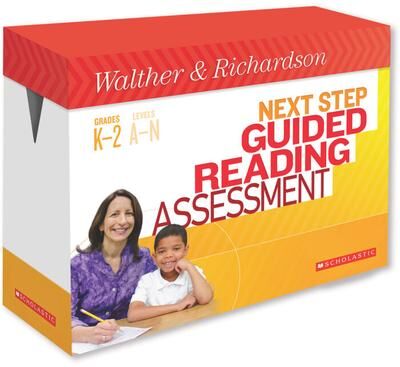
Scholastic Next Step Guided Reading Assessment, K-2Developed by leading literacy experts Jan Richardson, Ph.D., and Maria Walther, Ed.D., Next Step Guided Reading Assessment uses Richardson's proven Assess-Decide-Guide teaching system to pinpoint students' reading level and target instructional next...489,00 $*Shipping: 0,00 $Secure redirect to the provider
-
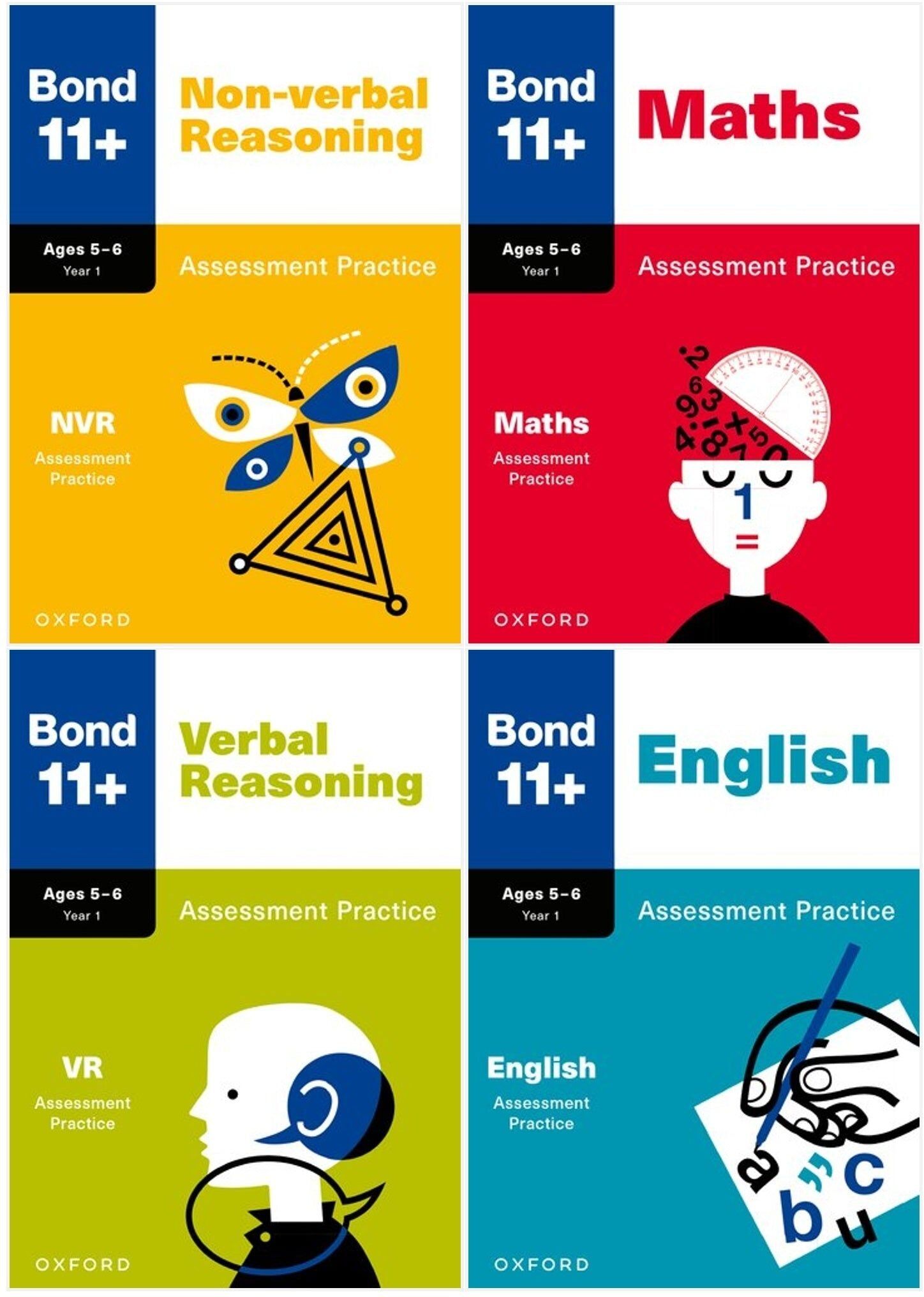
OXFORD UNIVERSITY PRESS Bond 11+ Maths English Verbal Non-Verbal Reasoning Assessment Practice 5-6 years 4 Books Set (Bond Assessment Papers)Bond 11+ English; Maths; Non-verbal Reasoning; Verbal Reasoning Assessment Practice 4 Books Set (Age 5-6) The pack includes the following 4 books (Bond 11 Plus books) Bond 11+ Maths Assessment Practice Ages 5-6 Bond Maths Assessment Practice for 5-6 years are topic-based practice questions that set the foundation for success in SATs; common entrance or 11+ exams. They have been written to cover the core National Curriculum skills and cover the question types used in 11+ exams; building the skills and confidence for exam success. Bond 11+ English Assessment Practice Ages 5-6 Bond English Assessment Practice for 5-6 years are topic-based practice questions that set the foundation for success in SATs; common entrance or 11+ exams. They have been written to cover the core National Curriculum skills and cover the question types used in 11+ exams; building the skills and confidence for exam success Bond 11+ Verbal Reasoning Assessment Practice Ages 5-6 Bond Verbal Reasoning Assessment Practice for 5-6 years introduces children to verbal reasoning problem-solving skills; encouraging thinking skills and providing early preparation for Common Entrance and 11+ exams. Bond 11+ Non-Verbal Reasoning Assessment Practice Ages 5-6 Bond Non-verbal Reasoning Assessment Practice for 5-6 years introduces children to non-verbal reasoning problem-solving skills; encouraging thinking skills and providing early preparation for Common Entrance and 11+ exams.14,40 £*Shipping: 2,99 £Secure redirect to the provider
-
What is the equivalence of the continuity concepts Epsilon-Delta and sequential continuity?
The equivalence of the continuity concepts Epsilon-Delta and sequential continuity lies in the fact that they both capture the idea of a function being continuous at a point. In the Epsilon-Delta definition, continuity is defined in terms of neighborhoods and limits, while in sequential continuity, it is defined in terms of sequences converging to a point. Both definitions ultimately aim to capture the intuitive notion of a function having no sudden jumps or breaks at a particular point. Despite the differences in their formal definitions, both concepts are equivalent and can be used interchangeably to prove continuity of a function. **
-
How can one disprove continuity?
One way to disprove continuity is to find a point where the function is not defined or where the limit of the function does not exist. Another way is to show that the function has a jump discontinuity, where the value of the function changes abruptly at a certain point. Additionally, one can disprove continuity by demonstrating that the function has an infinite discontinuity, such as a vertical asymptote where the function approaches infinity at a certain point. **
-
What is the continuity equation?
The continuity equation is a fundamental principle in fluid dynamics that states that the mass of a fluid entering a system must be equal to the mass of the fluid leaving the system, assuming there are no sources or sinks of mass within the system. Mathematically, it is expressed as the equation of continuity, which states that the product of the fluid density, velocity, and cross-sectional area must remain constant at any point along a flow. This equation is derived from the principle of conservation of mass and is essential for understanding and analyzing fluid flow in various engineering applications. **
-
Why does differentiability imply continuity?
Differentiability implies continuity because in order for a function to be differentiable at a point, it must be continuous at that point. This is because the definition of differentiability includes the existence of a derivative, which in turn requires the function to be continuous. If a function is not continuous at a point, it cannot have a derivative at that point, and therefore cannot be differentiable. Therefore, differentiability implies continuity. **
* All prices are inclusive of VAT and, if applicable, plus shipping costs. The offer information is based on the details provided by the respective shop and is updated through automated processes. Real-time updates do not occur, so deviations can occur in individual cases. ** Note: Parts of this content were created by AI.