Buy paytaxes.eu ?
We are moving the project
paytaxes.eu .
Are you interested in purchasing the domain
paytaxes.eu ?
domain@kv-gmbh.de · 0541-91531010
Buy paytaxes.eu ?
Who invented bacteria?
The discovery of bacteria is attributed to Dutch scientist Antonie van Leeuwenhoek. He is considered the "Father of Microbiology" and is credited with being the first person to observe and document bacteria using a microscope in the 17th century. **
Are bacteria protists?
No, bacteria are not protists. Bacteria are single-celled microorganisms that lack a nucleus and other membrane-bound organelles, and they belong to the domain Bacteria. On the other hand, protists are a diverse group of eukaryotic microorganisms that can be single-celled or multicellular, and they belong to the domain Eukarya. Therefore, bacteria and protists are two distinct groups of microorganisms with different characteristics and evolutionary histories. **


Similar search terms for Bacteria
Top-Angebote
Products related to Bacteria:
-
Dettol Spray, Bathroom Cleaner, 1L, Limescale Remover, Sparkling Clean, Tackles Grease and Grime, No Need to Rinse, Kills 99.9 Percent of Bacteria andKILLS 99.9 PERCENT OF BACTERIA AND ENVELOPED VIRUSES: Always reads the label and product information before use. 10X CLEANING POWER: On Soapscum vs water; this powerful cleaner cuts through the toughest grease, grime and dirt for a quicker and highly effective clean. REMOVES LIMESCALE: The active oxygen formula penetrates and dissolves tough grease, dirt, and limescale. SUITABLE FOR: Bathroom sinks, taps, toilet seat & bowl, shower screens, vinyl, sealed, laminated and linoleum floors. HOW TO USE: Simply spray directly on the surface, wipe over with clean damp cloth and allow to dry, no need to rinse. NOT SUITABLE FOR: Marble, brass, copper, unfinished wood, carpet, fabrics, and unwaxed vinyl. Packaging may vary. No harsh chemical residue. Kills 99.9% of bacteria. With active oxygen19,49 £*Shipping: 0,00 £Secure redirect to the provider
-
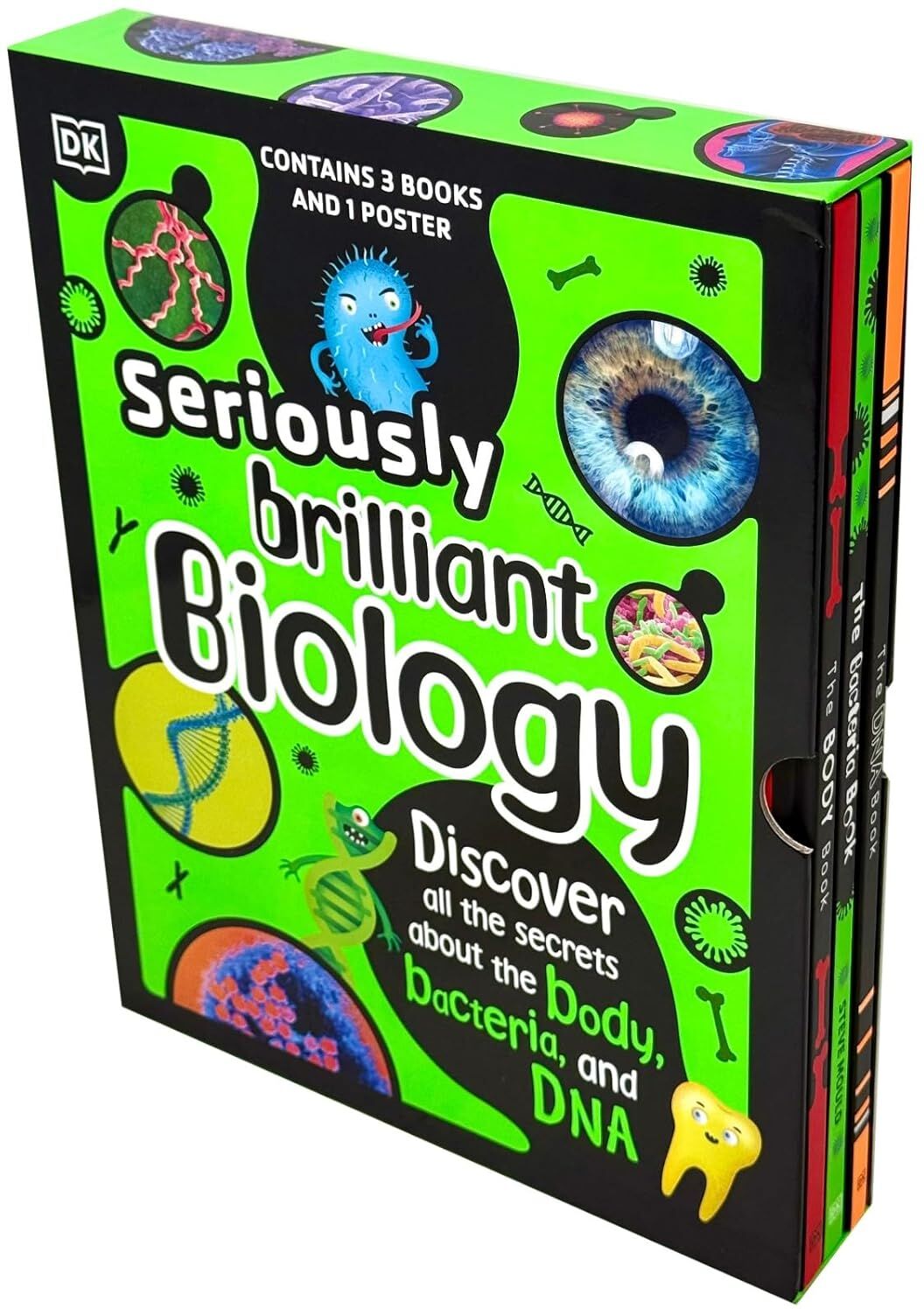
DK Children DK Seriously Brilliant Biology 3 Books Box Set and 1 Poster (The Body Book, The DNA Book and The Bacteria Book)The Body Book: It's inside every living plant and animal, from the tiniest seed to the person standing next to you, but how much do you know about DNA? This book gives children an in-depth look at DNA and its role in all living things--from why we have different-colored eyes to why we age. Discover what DNA is, what it does, and how it shapes our lives, including inheritance and why we look like our parents; forensic science and how DNA evidence helps catch criminals; and genetic engineering and if we could bring dinosaurs back to life. With fun illustrated DNA characters, clear diagrams, and astonishing photographs, children will love learning about themselves and this all-important molecule. The Body Book : Your body is awe-inspiring, amazing and miraculous. Your heart pumps blood all around your body to keep you alive and carry you around every single day. It keeps you alive and carries you around every day. But how much do you really know about what's going on beneath the surface? Jump on board as DK takes you on a fun-filled journey under your skin, through your insides, and back in time to explore milestones in medicine and the latest scientific discoveries about the human body. Are you coming? The Bacteria Book: What do glowing squid, mouldy bread, and soil creatures all have in common? They're all part of the world of microbiology! In this awesome introductory book for budding scientists, the big world of tiny organisms is revealed with remarkable photography, kooky characters, and lots of fun facts.12,99 £*Shipping: 2,99 £Secure redirect to the provider

-
Which bacteria form endospores?
Certain bacteria, such as Bacillus and Clostridium, are known to form endospores. These endospores are a dormant, tough, and non-reproductive structure that allows the bacteria to survive in harsh conditions, such as extreme temperatures, high levels of radiation, or lack of nutrients. Endospore formation is a survival mechanism for these bacteria, allowing them to remain viable until conditions become more favorable for growth and reproduction. **
-
When are bacteria useful?
Bacteria are useful in various ways, such as in the production of food and beverages (e.g., yogurt, cheese, and beer), in the decomposition of organic matter, in the nitrogen cycle, in bioremediation processes, and in the production of antibiotics and other pharmaceuticals. Additionally, bacteria play a crucial role in our digestive system by aiding in the breakdown of food and the absorption of nutrients. **
-
Are these bacteria dangerous?
The bacteria mentioned in the text, Pseudomonas aeruginosa, can be dangerous for individuals with weakened immune systems or underlying health conditions. In healthy individuals, it may not cause any harm. However, if left untreated, Pseudomonas aeruginosa infections can lead to serious complications, especially in hospital settings where it can cause healthcare-associated infections. It is important to seek medical attention if you suspect an infection with this bacteria. **
-
How do bacteria feed?
Bacteria feed by absorbing nutrients from their environment through a process called diffusion. They release enzymes that break down complex molecules into simpler forms that can be easily absorbed. Some bacteria are able to engulf food particles through a process called phagocytosis. Overall, bacteria have diverse feeding strategies and can utilize a wide range of organic and inorganic compounds for their nutrition. **

How can bacteria survive?
Bacteria can survive in various ways, including forming spores that are resistant to harsh conditions, developing antibiotic resistance through genetic mutations, and forming biofilms that protect them from environmental stress. Additionally, bacteria can adapt to different environments by utilizing various metabolic pathways to obtain nutrients and energy. Some bacteria can also exchange genetic material through horizontal gene transfer, allowing them to acquire new traits that help them survive in changing conditions. **
Do feces have bacteria?
Yes, feces contain a variety of bacteria, as well as other microorganisms such as viruses and parasites. The human gut is home to trillions of bacteria that aid in digestion and other bodily functions. When feces are excreted, they carry a significant amount of these bacteria out of the body. While some of these bacteria are beneficial, others can be harmful if they enter the body through contamination. Proper hygiene and sanitation practices are important for preventing the spread of harmful bacteria from feces. **
Top-Angebote
Products related to Bacteria:
-
iSpring FC15-BV Replacement Water Filter, CTO + Pleated Water Filter Cartridge for US31-BV & CW31-BV, Removes Bacteria & VirusesFeatures: Bacteria & Virus Removal: Lasts up to 12 months, the FC15-BV water filter replacement combines a pleated filter with activated carbon (CTO) to deliver superior filtration performance.62,99 $*Shipping: 0,00 $Secure redirect to the provider
-
Dettol Spray, Bathroom Cleaner, 1L, Limescale Remover, Sparkling Clean, Tackles Grease and Grime, No Need to Rinse, Kills 99.9 Percent of Bacteria andKILLS 99.9 PERCENT OF BACTERIA AND ENVELOPED VIRUSES: Always reads the label and product information before use. 10X CLEANING POWER: On Soapscum vs water; this powerful cleaner cuts through the toughest grease, grime and dirt for a quicker and highly effective clean. REMOVES LIMESCALE: The active oxygen formula penetrates and dissolves tough grease, dirt, and limescale. SUITABLE FOR: Bathroom sinks, taps, toilet seat & bowl, shower screens, vinyl, sealed, laminated and linoleum floors. HOW TO USE: Simply spray directly on the surface, wipe over with clean damp cloth and allow to dry, no need to rinse. NOT SUITABLE FOR: Marble, brass, copper, unfinished wood, carpet, fabrics, and unwaxed vinyl. Packaging may vary. No harsh chemical residue. Kills 99.9% of bacteria. With active oxygen19,49 £*Shipping: 0,00 £Secure redirect to the provider
-
DK Children DK Seriously Brilliant Biology 3 Books Box Set and 1 Poster (The Body Book, The DNA Book and The Bacteria Book)The Body Book: It's inside every living plant and animal, from the tiniest seed to the person standing next to you, but how much do you know about DNA? This book gives children an in-depth look at DNA and its role in all living things--from why we have different-colored eyes to why we age. Discover what DNA is, what it does, and how it shapes our lives, including inheritance and why we look like our parents; forensic science and how DNA evidence helps catch criminals; and genetic engineering and if we could bring dinosaurs back to life. With fun illustrated DNA characters, clear diagrams, and astonishing photographs, children will love learning about themselves and this all-important molecule. The Body Book : Your body is awe-inspiring, amazing and miraculous. Your heart pumps blood all around your body to keep you alive and carry you around every single day. It keeps you alive and carries you around every day. But how much do you really know about what's going on beneath the surface? Jump on board as DK takes you on a fun-filled journey under your skin, through your insides, and back in time to explore milestones in medicine and the latest scientific discoveries about the human body. Are you coming? The Bacteria Book: What do glowing squid, mouldy bread, and soil creatures all have in common? They're all part of the world of microbiology! In this awesome introductory book for budding scientists, the big world of tiny organisms is revealed with remarkable photography, kooky characters, and lots of fun facts.12,99 £*Shipping: 2,99 £Secure redirect to the provider
-
Who invented bacteria?
The discovery of bacteria is attributed to Dutch scientist Antonie van Leeuwenhoek. He is considered the "Father of Microbiology" and is credited with being the first person to observe and document bacteria using a microscope in the 17th century. **
-
Are bacteria protists?
No, bacteria are not protists. Bacteria are single-celled microorganisms that lack a nucleus and other membrane-bound organelles, and they belong to the domain Bacteria. On the other hand, protists are a diverse group of eukaryotic microorganisms that can be single-celled or multicellular, and they belong to the domain Eukarya. Therefore, bacteria and protists are two distinct groups of microorganisms with different characteristics and evolutionary histories. **
-
Which bacteria form endospores?
Certain bacteria, such as Bacillus and Clostridium, are known to form endospores. These endospores are a dormant, tough, and non-reproductive structure that allows the bacteria to survive in harsh conditions, such as extreme temperatures, high levels of radiation, or lack of nutrients. Endospore formation is a survival mechanism for these bacteria, allowing them to remain viable until conditions become more favorable for growth and reproduction. **
-
When are bacteria useful?
Bacteria are useful in various ways, such as in the production of food and beverages (e.g., yogurt, cheese, and beer), in the decomposition of organic matter, in the nitrogen cycle, in bioremediation processes, and in the production of antibiotics and other pharmaceuticals. Additionally, bacteria play a crucial role in our digestive system by aiding in the breakdown of food and the absorption of nutrients. **
Similar search terms for Bacteria
-
HMRC Series By Juno Dawson 3 Books Collection Set - Fiction - Paperback HarperCollins PublishersTitles in this set: 1. Her Majesty’s Royal Coven 2. The Shadow Cabinet 3. Queen B Description: Her Majesty’s Royal Coven This Is One Government Department You Don’t Want To Mess With. Hidden among us is a secret coven of witches. Know has Her Majesty’s Royal Coven,they protect the crown and country from magical forces and otherworldly evil. But their greatest enemy will come from within… There are whisperings of a prophecy that will bring the coven to its knees, and four best friends are about to be caught at the centre. Life as a modern witch was never simple … but now it’s about to get apocalyptic. The Shadow Cabinet All is not as it seems within the halls of Her Majesty’s Royal Coven… Despite thinking they’ve thwarted the prophecy, the witches are still reeling from the events of the past few months. Ciara now occupies her twin sister’s body as she prepares to take on the role of High Priestess. But why are the sinister government agents of the Shadow Cabinet so invested in her coronation? And then there’s the small matter of Dabney Hale: freshly escaped from Grierlings prison, he’s on the hunt for a mythical object that will give him unimaginable power. Leonie’s brother is on the trail, but doesn’t know the danger he now faces, and so she sets off to bring him home and bring Hale to justice. Meanwhile, Theo and Holly are left to their own devices. Theo to work out how her miraculous transformation took place and Holly to discover what’s going on with her mum and dad. Elle’s Instagram-perfect world is about to come crashing down in the most terrifying way. Queen B It’s 1536 and the Queen has been beheaded. Lady Grace Fairfax, witch, knows that something foul is at play – that someone had betrayed Anne Boleyn and her coven. Wild with the loss of their leader – and her lover, a secret that if spilled could spell Grace’s own end – she will do anything in her power to track down the traitor. But there’s more at stake than revenge: it was one of their own, a witch, that betrayed them, and Grace isn’t the only one looking for her. King Henry VIII has sent witchfinders after them, and they’re organized like they’ve never been before under his new advisor, the impassioned Sir Ambrose Fulke, a cold man blinded by his faith. His cruel reign could mean the end of witchkind itself. If Grace wants to find her revenge and live, she will have to do more than disappear. She will have to be reborn. In this gripping, propulsive, sultry novella, Juno Dawson takes us back to the bloody beginnings of Her Majesty’s Royal Coven to show us the strength, steel and sacrifice it takes to make a sisterhood. Feature Specification Author Juno Dawson Books Included Her Majesty's Royal Coven, The Shadow Cabinet, Future Perfect Format Paperback Collection Target Audience Adult / New Adult (Ages 16+) Publisher Harper Voyager (HarperCollins) Genre Contemporary Fantasy / Urban Fantasy Key Themes Witchcraft, Sisterhood, British Politics, LGBTQ+ Identity 2026 Context Established...22,99 £*Shipping: 2,99 £Secure redirect to the provider
-
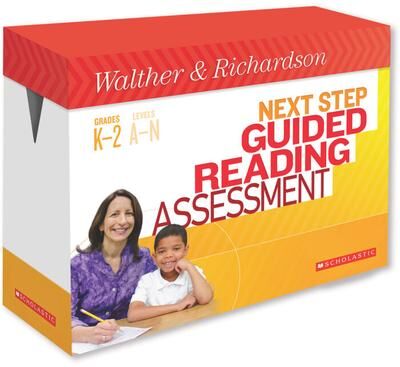
Scholastic Next Step Guided Reading Assessment, K-2Developed by leading literacy experts Jan Richardson, Ph.D., and Maria Walther, Ed.D., Next Step Guided Reading Assessment uses Richardson's proven Assess-Decide-Guide teaching system to pinpoint students' reading level and target instructional next...489,00 $*Shipping: 0,00 $Secure redirect to the provider
-
Are these bacteria dangerous?
The bacteria mentioned in the text, Pseudomonas aeruginosa, can be dangerous for individuals with weakened immune systems or underlying health conditions. In healthy individuals, it may not cause any harm. However, if left untreated, Pseudomonas aeruginosa infections can lead to serious complications, especially in hospital settings where it can cause healthcare-associated infections. It is important to seek medical attention if you suspect an infection with this bacteria. **
-
How do bacteria feed?
Bacteria feed by absorbing nutrients from their environment through a process called diffusion. They release enzymes that break down complex molecules into simpler forms that can be easily absorbed. Some bacteria are able to engulf food particles through a process called phagocytosis. Overall, bacteria have diverse feeding strategies and can utilize a wide range of organic and inorganic compounds for their nutrition. **
-
How can bacteria survive?
Bacteria can survive in various ways, including forming spores that are resistant to harsh conditions, developing antibiotic resistance through genetic mutations, and forming biofilms that protect them from environmental stress. Additionally, bacteria can adapt to different environments by utilizing various metabolic pathways to obtain nutrients and energy. Some bacteria can also exchange genetic material through horizontal gene transfer, allowing them to acquire new traits that help them survive in changing conditions. **
-
Do feces have bacteria?
Yes, feces contain a variety of bacteria, as well as other microorganisms such as viruses and parasites. The human gut is home to trillions of bacteria that aid in digestion and other bodily functions. When feces are excreted, they carry a significant amount of these bacteria out of the body. While some of these bacteria are beneficial, others can be harmful if they enter the body through contamination. Proper hygiene and sanitation practices are important for preventing the spread of harmful bacteria from feces. **
* All prices are inclusive of VAT and, if applicable, plus shipping costs. The offer information is based on the details provided by the respective shop and is updated through automated processes. Real-time updates do not occur, so deviations can occur in individual cases. ** Note: Parts of this content were created by AI.